Like the menu of one and the colours of another? Add the designs you like, send them to us, and we design a new website from them. We reply with a price first.
Nothing added yet — press “+ Add to my mix” on any design.
TGPSC Groups · UPSC prelims · Ashok Nagar, Hyderabad
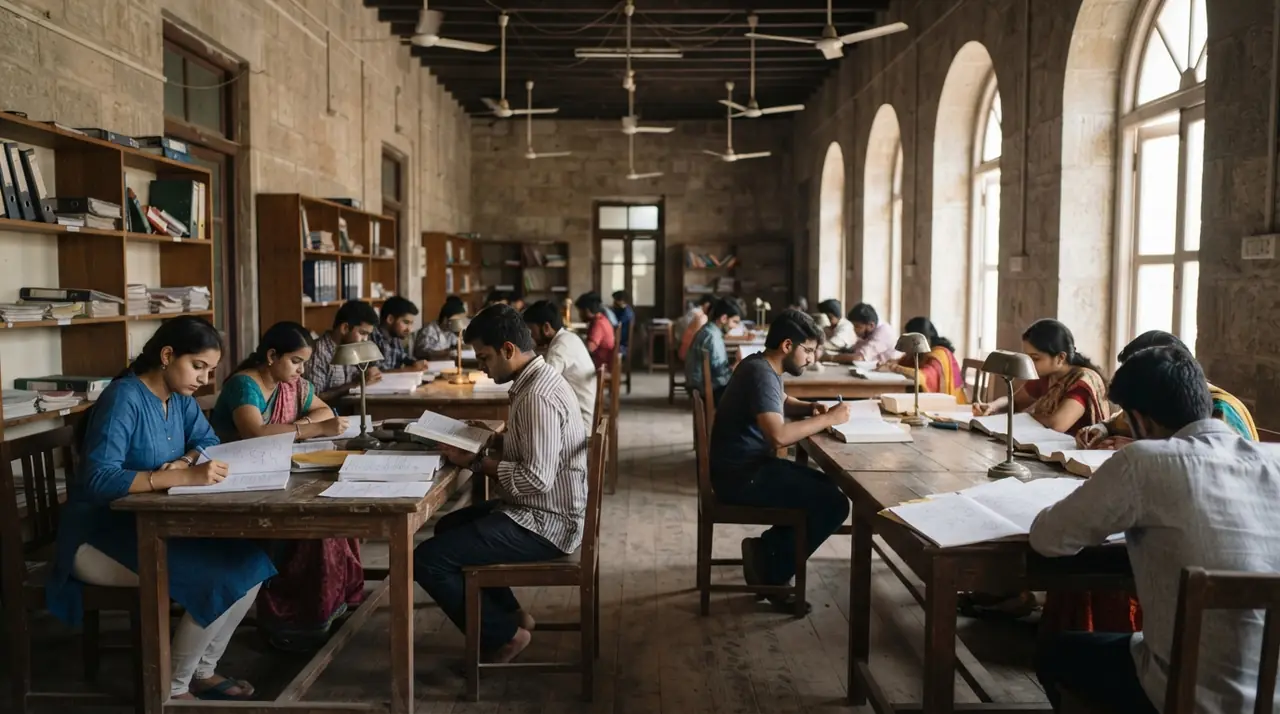
A quiet hall. A fixed routine. A teacher who knows you.
Vihanga Study Circle is a founder-led centre for graduates preparing for TGPSC Group exams and UPSC prelims. Join a free demo class and sit in the hall for a day.
Sudhakar Goud prepared for government exams himself and found that the hardest part was not the syllabus, it was a place to sit quietly for eight hours. In the year he started Vihanga, he rented a single room near Ashok Nagar X Roads, bought eight desks and put a timetable on the wall.
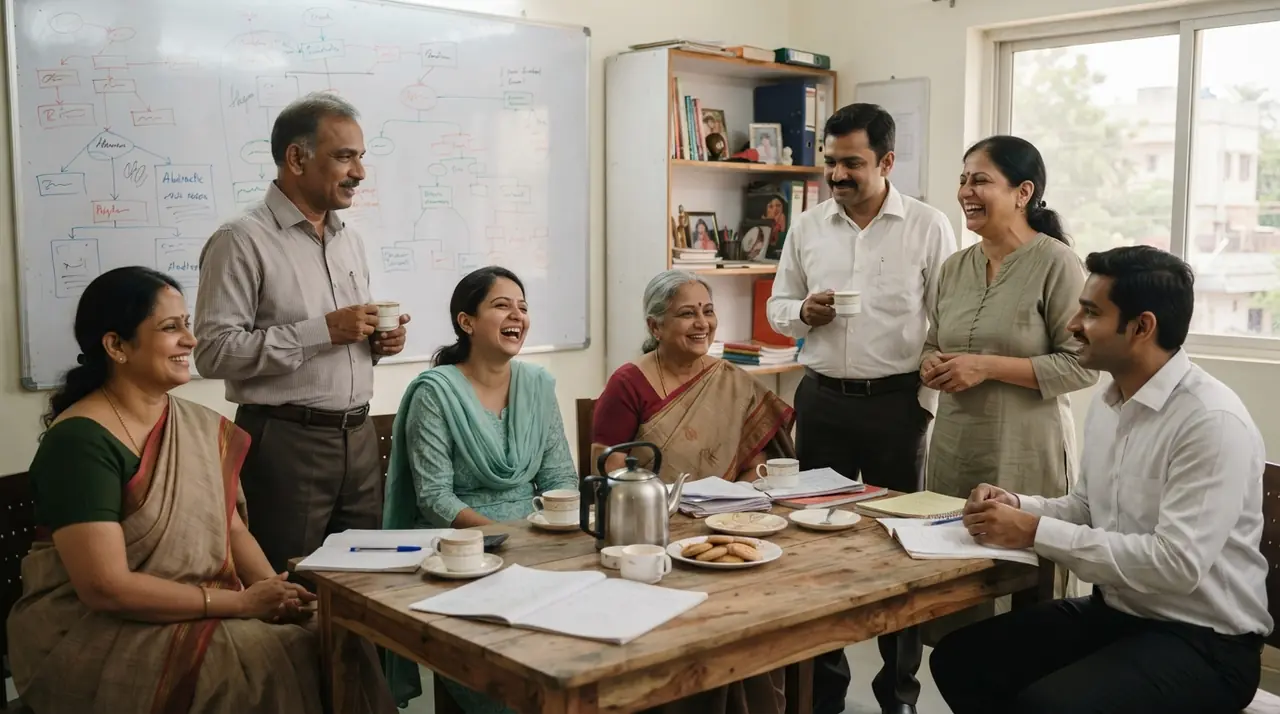
Friends from his own preparation days joined to take classes. There was no brochure, only the hall, the timetable and a rule that nobody talks between seven in the morning and noon.
02
Chapter 02 · The study hall
Silence is the first thing we teach
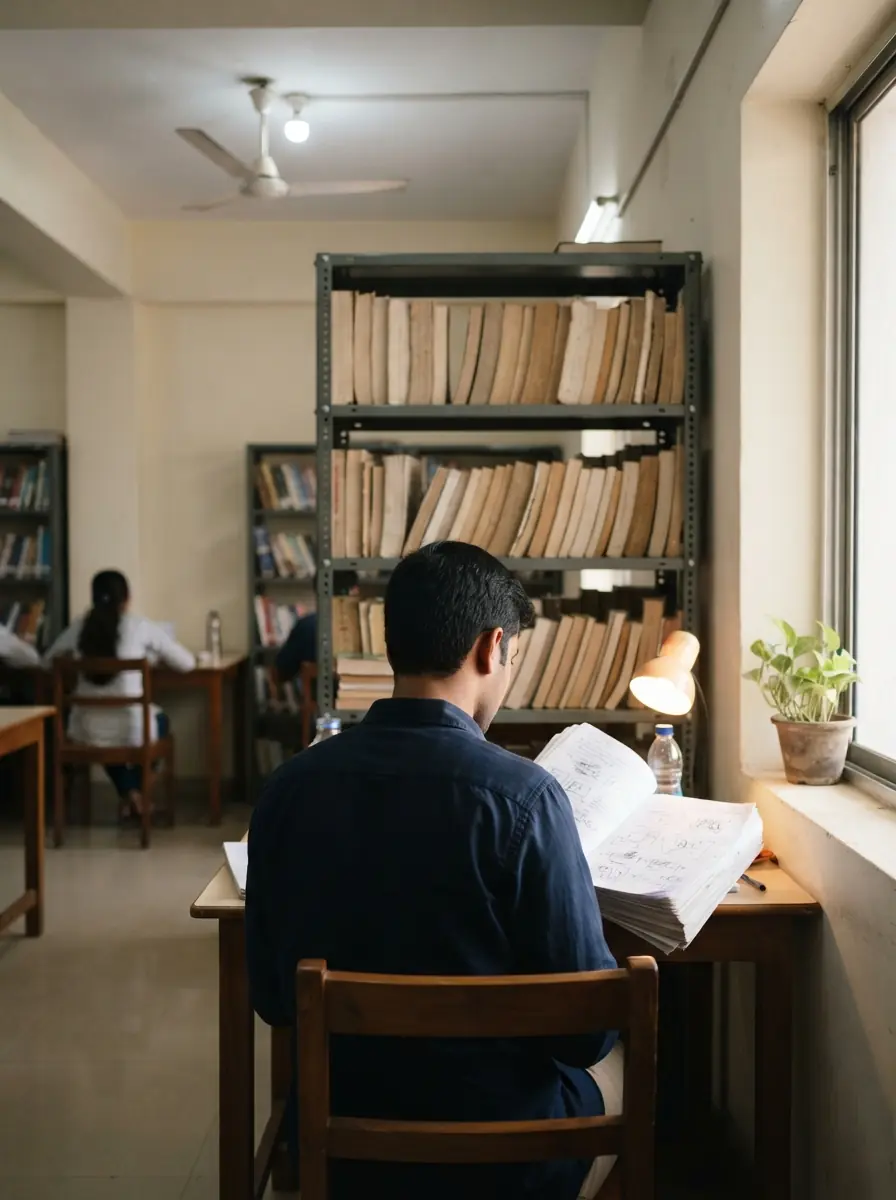
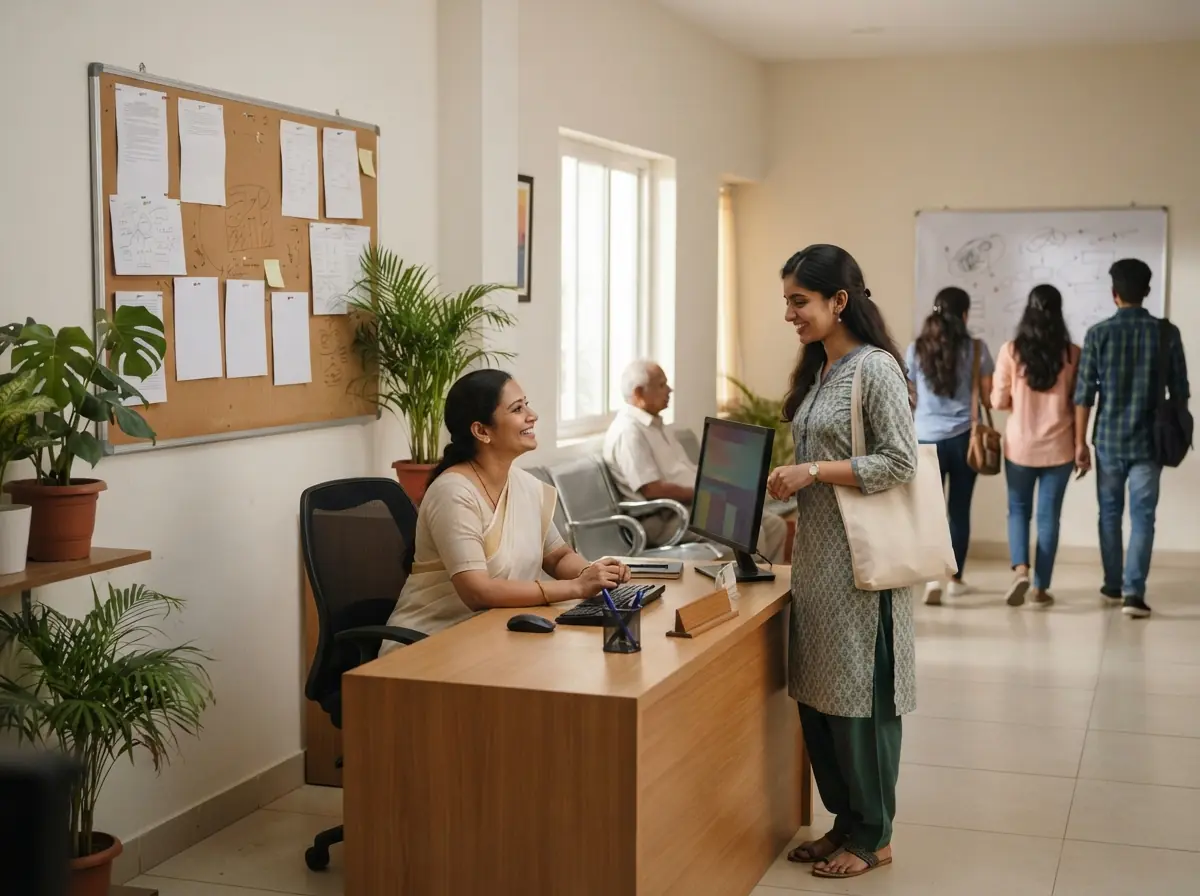
The hall opens at six in the morning and closes at ten at night. Each aspirant has a fixed desk with a reading lamp, a locker and a ceiling fan that nobody else touches.
A teacher sits at the front of the hall during the day to answer doubts in a whisper or at the side table. When you need to talk, you walk to the discussion room.
Courses
Four courses, one study hall
Graduates preparing for Group 2 and Group 3 · 6 months
TGPSC Group 2 & 3 foundation
Syllabus classes, a daily answer and Sunday papers, with a fixed desk in the study hall.
TGPSC Group 2 & 3 foundationMon · Tue · Wed · Thu · Fri · Sat7:00–10:00 amClassroom10 seats leftTry a class →
TGPSC Group 2 & 3 foundationMon · Tue · Wed · Thu · Fri5:00–8:00 pmClassroom14 seats leftTry a class →
TGPSC Group 2 & 3 foundationSat · Sun10:00 am–4:00 pmOnline30 seats leftTry a class →
TGPSC Group 1, prelims to mainsMon · Tue · Wed · Thu · Fri · Sat7:00–10:30 amClassroom7 seats leftTry a class →
TGPSC Group 1, prelims to mainsMon · Wed · Fri5:00–8:30 pmClassroom12 seats leftTry a class →
UPSC prelims: GS Paper I + CSATMon · Tue · Wed · Thu · Fri8:00–11:00 amClassroom9 seats leftTry a class →
UPSC prelims: GS Paper I + CSATSat · Sun9:00 am–1:00 pmOnline25 seats leftTry a class →
Test series and answer feedbackSun9:00 am–12:00 noonClassroom40 seats leftTry a class →
03
Chapter 03 · Answer writing
Write one long answer every day
Mains-style exams reward people who can organise an answer. Every aspirant writes one answer a day by hand, on a topic given the evening before, and hands it in by ten in the morning.
It comes back with a note on structure, a different example, and a line on handwriting or time. We keep the notes together in your folder so you can see the pattern after a month.
04
Chapter 04 · The test routine
A paper every Sunday, a review every Monday
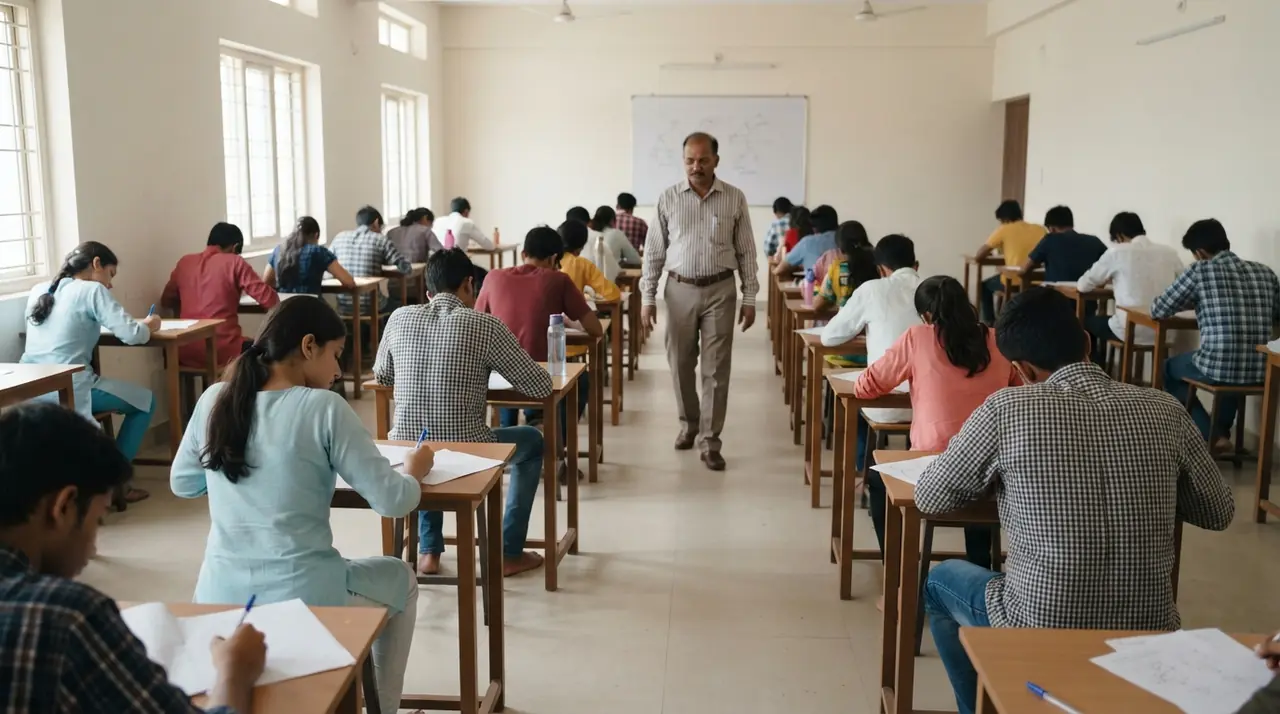
On Sunday morning the hall becomes a test room. Papers follow the pattern in the latest notification for the exam you are preparing for, such as GS Paper I and the CSAT paper for UPSC prelims.
Monday evening is the review: the faculty goes through the questions that most people missed, and each aspirant gets a three-line note on what to fix before the next Sunday.
Timeline
A year inside the circle
Month 1
Orientation and a fixed desk
You take a diagnostic test, meet your mentor and get a desk, a locker and a week-by-week plan.
Months 2–3
Syllabus classes
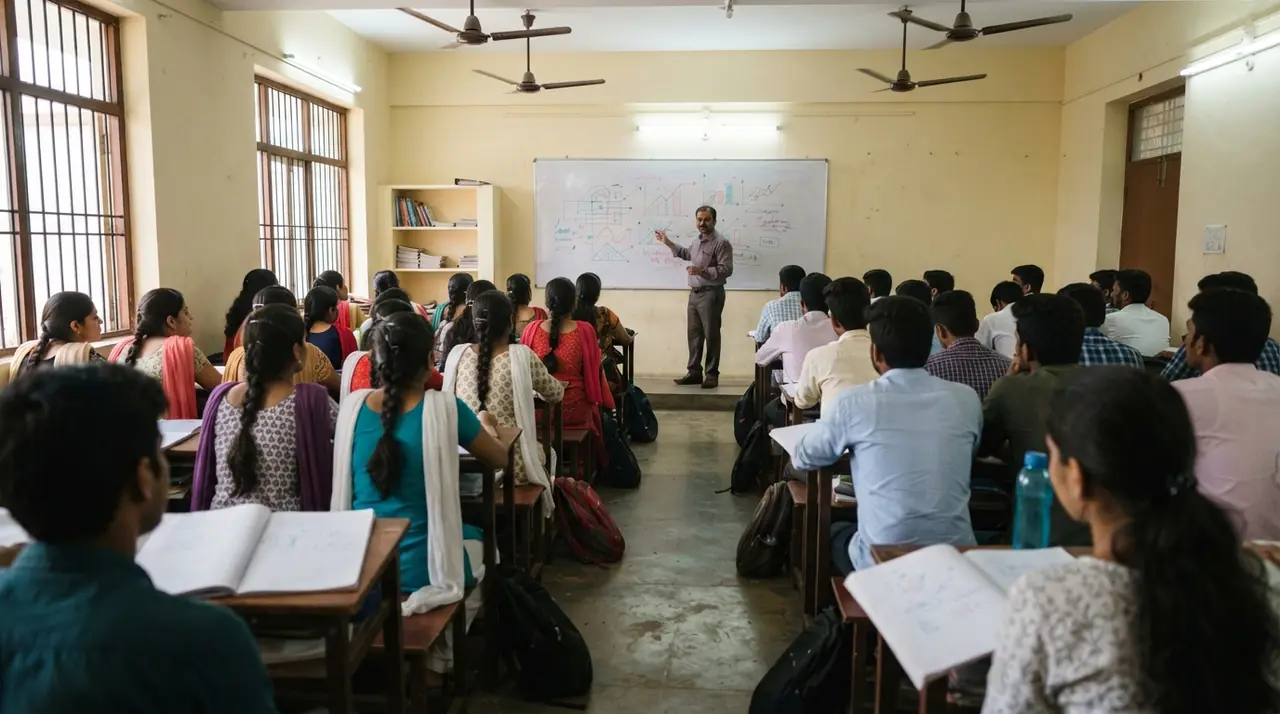
Polity, history, geography and economy in classroom batches, with Telangana-focused sessions where the exam asks for them.
Months 4–5
Revision and answer writing
Daily written answers and a second pass through each subject, with one-to-one feedback every fortnight.
Months 6+
Mock tests and final revision
Full-length papers on Sundays and a short revision plan for the weeks before the exam date.
Free demo
What a day looks like
Pick a course and the batch you would join. Come fifteen minutes early, sit through a full class and stay for the test discussion if there is one.
Free demo class · no fee, no obligation
A note from the founder
The person who started it
I started Vihanga because I needed a room like this myself. If you are preparing for a government exam, you need silence, a plan and someone who will tell you plainly when you are drifting.
Come and sit in the hall for a day. If it suits you, we will talk about a course; if not, you will at least know what a good study place feels like.
Sudhakar GoudFounder and mentor
Reviews
In their words
★★★★★
“The hall is the biggest thing for me. At home I could not sit for four hours without a call or a visitor.”
Mahesh, Chikkadpally★★★★★
“Madam’s notes on my daily answers are short and direct. After a month my structure was visibly better.”
Spandana, Himayatnagar★★★★★
“Sunday paper, Monday review. The routine is simple and I stopped wondering what to do next.”
You sit in a real class and spend the day in the study hall. There is no payment and no form beyond your name and phone number.
Which exams do you prepare students for?
TGPSC Group 1, 2 and 3, and the UPSC civil services prelims. Courses are separate so you pay only for the one you need.
What is the study hall?
A silent hall with fixed desks, lamps and lockers, open from 6 am to 10 pm. Course students have a desk included; others can take one monthly.
How does the answer-writing practice work?
You write one answer a day by hand, on a topic given the evening before, and it comes back with a note on structure.
Can I join online?
Weekend online batches run for the Group 2 & 3 and UPSC prelims courses; the study hall desk is in person.
Adyft Sites · for coaching centre owners looking for a website
About this study circle website design
This is the Story design: the home page reads like a short film in chapters. A full-width photo of the study hall opens it, and the founder’s story, the daily routine and a timeline of the course follow, each with its own photo. It suits founder-led centres where trust in a person matters most.
What is on this home page
Full-screen study hall photo with a one-line promise and a free demo button
Four numbered chapters on how the centre began, the hall, answer writing and tests
A wide photo between chapters to give the page room to breathe
A five-step timeline of the course from orientation to final revision
A founder note with portrait, and three short reviews
A free-demo sign-up with courses and batches, then FAQ
A visit section with the nearest metro stations and hours
Why it brings in aspirants
Aspirants are choosing a place to spend most of their day. The chapters show the hall, the founder and the routine before they ask about fees, and the sign-up form sits right after, so the interest has somewhere to go. Courses, fees and batch timings are written as text, which helps Google and AI assistants answer searches such as TGPSC coaching in Ashok Nagar.
Made for your coaching centre
Your own founder story and routine become the chapters, your photos fill the page and your courses go into the demo form. It suits any centre with a strong personal story: a music school, a language institute or a skills academy.
What it costs with Adyft Sites
A page like this fits the Starter plan: 5 pages (Home, About, Courses, Gallery and Contact), ₹7,999 once and ₹499 a month with one article (one new article a month) or ₹299 without. It goes live in under 7 days. The demo sign-up reaches you like any enquiry form, with the WhatsApp button beside it.