Websites / Templates / Boutique hotels & B&Bs
A boutique hotel website built to win the direct booking
Guests choosing a small hotel want to feel its character before they commit, then book without paying a booking-site markup. This template leads with real photography and the hotel’s story, states what each room includes, and sends every booking straight to you.
From $1,499 + $69/month · live in under 7 days · we write every page for you
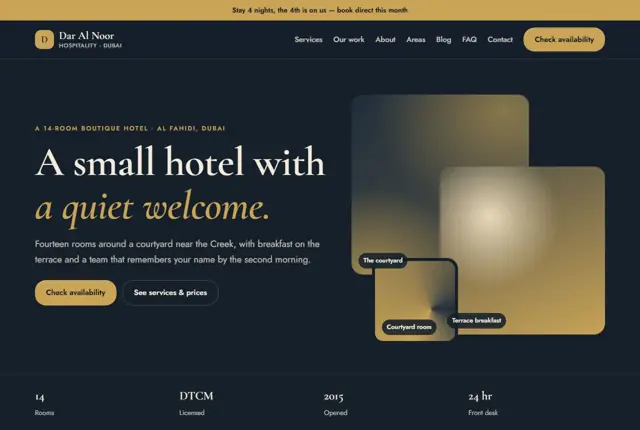
Choose your look
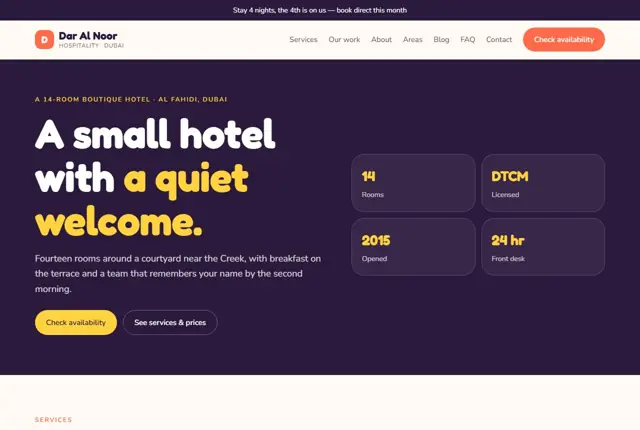
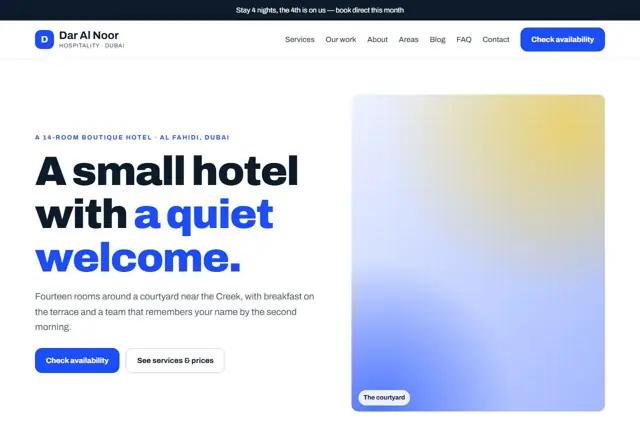
3 designs for your boutique hotel
Same pages and words, three different styles. Pick one — or mix parts of them — and we match it to your colours and logo.
What your customers look for
Answer these before they ask
- What each room actually looks like and includes
- Whether breakfast and transfers are included
- How many rooms there are and where you are located
- How to book directly instead of through a booking site
Pages we build for you
Your boutique hotel website, page by page
- Home with a direct-booking offer
- Rooms and rates
- One page per room type (Growth and Pro)
- About the hotel
- Local area guide
- Dining and extras
- Check availability
FAQ, Contact and Privacy pages are free on every plan.
Free guide
Designing a boutique hotel website that earns direct bookings
Pages that sell a small hotel
A boutique hotel sells atmosphere first and rooms second, so lead with photographs of the building, the lobby and the breakfast table. Then give every room type its own page with bed size, view, bathroom, floor, size in square metres or feet and what is included. Vague names such as “Superior Room” mean nothing without detail.
Add pages for dining, the neighbourhood, special offers and your story. A good story page explains who owns the place, why it exists and what makes a stay different. Close with a clear availability page and a contact page showing the address, arrival instructions and check-in times.
Keep the booking route short. A guest should reach availability within two taps from any page, and the form should ask only for dates, guest numbers and room preference. Extra questions can come later, once the guest has committed and is happy to share details.
- Rooms
- Dining
- The area
- Offers
- Our story
- Check availability
Answering the questions guests ask before booking
Travellers compare several places in one sitting. They look for room size, noise, lift access, air conditioning, parking, breakfast and cancellation terms. Put these facts on the room and policy pages instead of leaving guests to email you. Guests who find answers quickly are more likely to book while the tab is still open.
Be specific about location. Say how many minutes it takes to walk to the beach, old town or train station, and how guests arrive from the airport. Mention anything that might surprise people, such as stairs, a shared courtyard or a quiet-hours rule. Honest descriptions lead to better reviews.
Add a page of practical arrival information. Cover check-in and check-out times, luggage storage, late arrivals, taxi directions and how to reach the property on foot. A tired traveller who knows exactly how to find you arrives in a better mood.
How travellers search
Guests search by place and style: “boutique hotel near Edinburgh Castle”, “B&B with parking in Bath”, “quiet courtyard hotel Dubai creek”. Use the neighbourhood, landmark and room features in headings and text, and avoid generic phrases that every property uses.
Travellers also ask assistants about particular needs, such as dog-friendly rooms, family suites or places for a quiet anniversary. Add short sections that answer those questions truthfully. When a feature does not apply, say so; a clear no helps the right guest choose you and the wrong guest choose elsewhere.
Seasonal and event-driven searches are common in hospitality. Festivals, weddings, conferences and school holidays all push demand, so mention nearby events with dates and give guests a reason to book early. Update the pages each year so they never look stale.
Encouraging direct bookings without hiding information
Give guests a reason to book with you: a free late checkout, a welcome drink, a flexible change policy or a better room on request. State the benefit near the booking button and make sure the price shown matches the final price. Guests who feel tricked rarely return.
Describe your booking process in simple steps and show the payment methods. Say when the deposit is charged and how refunds work. If you use a booking engine, make sure it opens in the same style as your site, with the same room names and photos, so the visit feels like one experience.
Share your policies in plain English. Children, pets, smoking, noise, parking and cancellations should each have a short, friendly paragraph. Guests who read the rules beforehand are far less likely to complain on arrival.
Getting found locally as a boutique hotel
- Select “Boutique hotel”, “Bed and breakfast” or “Guest house” as the primary Google Business Profile category, matching how you actually operate.
- Fill in every amenity on your profile, from parking and Wi-Fi to pet policy and accessibility.
- Upload photographs of each room type, the exterior and the breakfast, and update them with each season.
- Reply to every review on travel sites and Google, thanking guests and addressing any concerns calmly.
- Join your regional tourism board and apply for any official star or quality grading available in your country.
- Write a local guide page with places you recommend, linking to neighbours you know personally.
- Keep your hotel name, address and phone number consistent on your site, listings and guest emails.
Mistakes to avoid
- Publishing a brochure as a PDF, which phones struggle to read and search engines handle badly.
- Showing rooms with no size, bed type or view, forcing guests to guess.
- Using a booking engine with a different look and room names from the site.
- Hiding cancellation terms until the final payment step.
- Using only photographs from an opening-week shoot while the rooms have changed since.
Built in for boutique hotels & b&bs
Features that matter in your industry
Direct-booking form that bypasses commission sites
Room pages with what is included stated plainly
Local area guide written for guests, not search engines
Found by Google — and recommended by AI
Travellers ask assistants “quiet boutique hotel near Al Fahidi in Dubai with breakfast included”, looking for room count, location and what is included in the rate. This template states all three on the rooms page, not buried in a brochure PDF.
Every Adyft site also ships with fast loading, structured data for search engines and a clear page for each service.
Questions
About websites for boutique hotels & b&bs
Can guests book direct instead of through a booking site?
Yes, every page leads to a direct booking form or your booking engine, so you keep the full rate.
Can we show room types separately?
Yes, on Growth and above each room type gets its own page with photos and what is included.
Can guests read the site in Arabic as well as English?
Yes, the Scale plan adds a full second-language version for guests who prefer it.
Do I need a channel manager to take direct bookings?
Not necessarily. A small property can start with an enquiry form or a simple booking tool. If you also sell through other sites, a channel manager helps stop double bookings.
How many photographs does a boutique hotel need?
Aim for six to ten per room type plus the exterior, public spaces and breakfast. Professional photography is worth it for a hotel, because pictures decide the booking.
Can the site show seasonal prices?
Yes. We can display a rate table with seasons and minimum stays, or show a starting price with a link to live availability.
Can I add a gift voucher page?
Yes. A voucher page with amounts and a payment link works well for anniversaries and birthdays, and gives you cash up front.
What should I say about accessibility?
Describe facts: step-free entrances, lift access, bathroom layout and nearby parking. Guests who need accessible rooms search carefully, and clear facts help them choose you.
Should I include reviews on the site?
Only genuine reviews you have permission to quote, with a link to the original source. Never write or alter reviews; guests spot the difference quickly.






Your boutique hotel website, live this week.
Pick this design, answer a few questions on WhatsApp, and we build the rest.