Websites / Templates / Physiotherapy clinics
A physiotherapy website that gets patients booked, not just browsing
Someone searching for a physiotherapist is usually already in pain and wants to know three things fast: can you see them soon, what will it cost, and are you properly qualified. This template puts assessment pricing, registration and booking on the first screen, with a page for each kind of treatment you offer.
From $1,499 + $69/month · live in under 7 days · we write every page for you
Choose your look
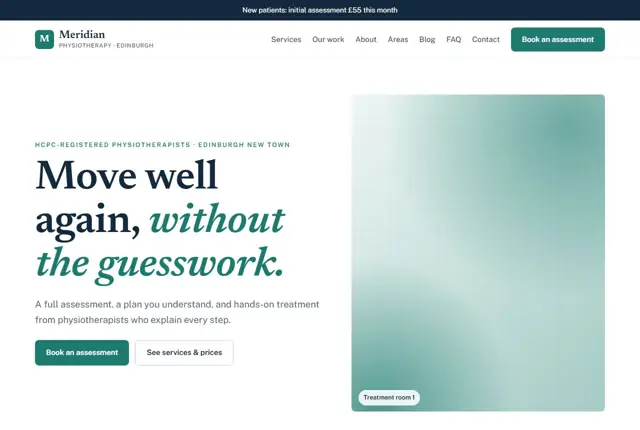
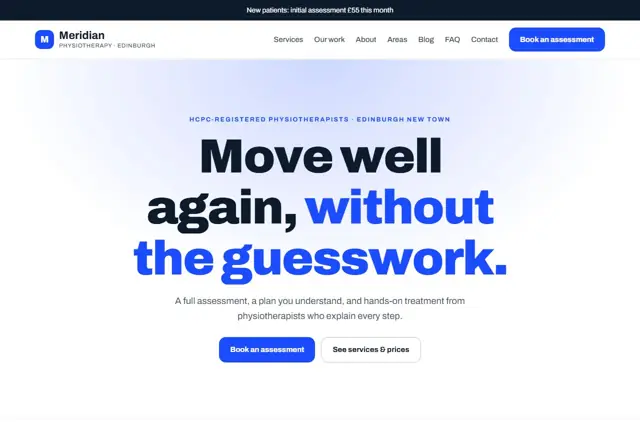
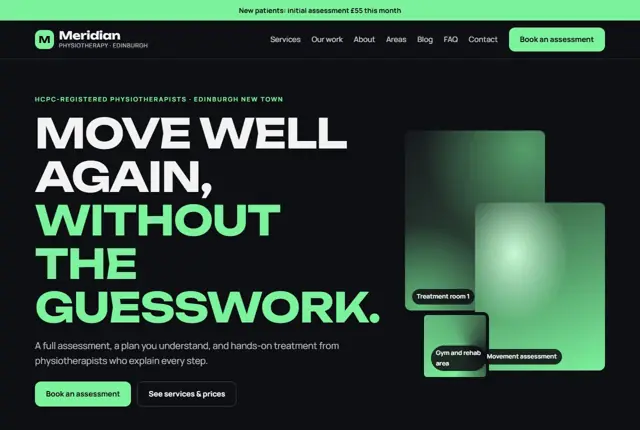
3 designs for your physiotherapy clinic
Same pages and words, three different styles. Pick one — or mix parts of them — and we match it to your colours and logo.
What your customers look for
Answer these before they ask
- How soon you can see a new patient
- What an assessment and follow-up visit cost
- Whether you are HCPC-registered and insured
- Which injuries or conditions you actually treat
Pages we build for you
Your physiotherapy clinic website, page by page
- Home with a new-patient offer
- Treatments and pricing
- One page per treatment (Growth plan)
- Meet the physiotherapists
- Areas you cover
- FAQ and insurance
- Book an assessment
FAQ, Contact and Privacy pages are free on every plan.
Free guide
What a physiotherapy clinic website should say to new patients
Structuring the site around conditions and treatments
Patients rarely search for “physiotherapy”. They search for what hurts: lower back pain, a sore knee, a frozen shoulder, a sprained ankle. Build one page per condition or treatment you handle well, and describe it in everyday words before adding clinical detail. A good page explains symptoms, what an assessment involves, typical treatment and when to see a doctor first.
Alongside those pages, keep a clear prices page, a team page with registrations and a booking page. Add a rehabilitation or exercise page for returning patients if you give home programmes. Link between related pages so a visitor reading about a knee injury can reach sports rehab with one tap.
Write each page as if answering a patient face to face. Open with the problem, explain the likely causes without frightening anyone, then describe how you help. End with a plain next step, such as booking an assessment, so the reader is never left wondering what to do.
Trust, qualifications and what a first visit involves
A patient in pain wants reassurance that the person treating them is qualified. In the UK, physiotherapists must be registered with the Health and Care Professions Council, and many also belong to the Chartered Society of Physiotherapy. In other countries, name your licensing body. Show registration numbers where the rules allow and where a patient can verify them.
Describe the first appointment step by step: the questions asked, the physical examination, the explanation of findings and the plan. Say how long it lasts and what to wear. Patients who know what to expect cancel less and arrive less nervous.
Mention what you do not treat, too. A clinic that tells a patient to see a doctor first for certain symptoms looks careful rather than evasive. It also saves appointments that would never have helped the person booking them.
How people search when they are hurting
Search wording is personal and urgent: “physio for sciatica near me”, “tennis elbow treatment Glasgow”, “physiotherapist who sees patients this week Abu Dhabi”. Mirror these phrases in headings and write answers beneath them. Availability matters, so say how soon new patients are usually seen.
People also ask assistants whether they need a referral, whether insurance covers a visit or how many sessions an injury might take. Address those on your site. Be careful with promises; explain that the number of sessions depends on the individual and the assessment.
Local detail matters here because patients rarely travel far. Mention parking, step-free access, bus or train links and whether home visits are available. A person with a bad back reads these details closely before choosing between two clinics.
Writing about health with care
Health pages carry responsibility. Avoid promising cures, and do not use patient names or photos without written consent. Before-and-after claims need careful wording, and patient stories should be genuine and approved. Regulators in many countries restrict how clinical results can be advertised, so check your professional body’s advertising guidance.
Make safety information easy to find. A short note on symptoms that need urgent medical attention, such as sudden numbness, loss of bladder control or chest pain, shows professionalism. Also state your cancellation terms plainly so patients know the cost of a missed slot before they book.
Keep your tone calm and practical. Avoid dramatic phrases about pain or injury, and use the same words your patients use. Clear, kind writing makes a clinic feel safe, and that feeling often decides the booking more than the list of techniques.
Getting found locally as a physiotherapy clinic
- Select “Physical therapist” or “Physiotherapist” as the primary Google Business Profile category, and add sports injury or chiropractic categories only if you provide those services.
- List each treatment as a service on your profile with a short description and starting price.
- Add photos of the treatment room, reception and entrance so patients know how to find you and what to expect.
- Ask patients for reviews at the end of a course of treatment, and never offer a reward in return.
- Create a page for each neighbouring town or district you serve, mentioning transport links and parking.
- Register with the insurers you work with and ask them to list your clinic in their provider search.
- Keep your name, address and phone number consistent across your website, maps listing and health directories.
Mistakes to avoid
- Using medical jargon throughout, so a patient with a sore hip cannot tell if the page applies to them.
- Offering no price for an assessment, leaving patients to assume private care is out of reach.
- Hiding registration details, which are the first thing a cautious patient checks.
- Publishing patient photos or testimonials without documented consent.
- Making the booking process a phone call only, when many patients enquire out of hours.
Built in for physiotherapy clinics
Features that matter in your industry
Assessment-booking form that asks for the injury upfront
Insurer list shown near the top of the home page
Exercise-plan page patients can return to after their visit
Found by Google — and recommended by AI
When someone asks an AI assistant “physiotherapist in Edinburgh who can see me this week for a bad shoulder”, it looks for a page that states assessment pricing and how soon you can be seen. This template puts both in the first few lines of the services page.
Every Adyft site also ships with fast loading, structured data for search engines and a clear page for each service.
Questions
About websites for physiotherapy clinics
Can it show which insurers you work with?
Yes, we list the insurers you bill directly near the top of the home page, so patients know before they call.
Can conditions like back pain or sports injuries get their own pages?
On Growth and above, treatments like sports injury rehab and post-surgery rehab each get a full page.
Will it show our HCPC registration?
Yes, registration and insurance details sit in the footer of every page, where patients expect to find them.
Can the website take bookings through our practice software?
Usually yes. Most clinic systems provide a booking link, and we point your Book button to it so appointments land directly in your diary.
Is it safe for patients to describe their injury in the enquiry form?
Keep the form short and ask only for name, contact details and the area affected. Patients should not enter detailed medical history on a website form; save that for the appointment.
Can we publish exercise videos?
Yes. Short demonstration videos can sit on a patient resources page. Make sure they carry a note that exercises suit some people and not others, and that patients should follow their own plan.
Do we need a privacy and cookie policy?
Yes, because you collect health-related enquiries. We include standard pages and you should have them checked against the data rules where you practise.
Can we offer online consultations?
Yes. Add a page describing remote sessions, what conditions suit them and which software you use. Patients searching for video appointments will find it.
How often should we update the site?
Update your prices, team and opening hours whenever they change, and add a new article or condition page every month or two. Steady additions keep the site useful to patients and search engines.






Your physiotherapy clinic website, live this week.
Pick this design, answer a few questions on WhatsApp, and we build the rest.