Websites / Templates / Caterers
A catering website that turns a tasting into a booking
People hiring a caterer want to picture the actual food, not a stock photo of a buffet. This template shows real menus with per-guest pricing, explains what full-service includes, and makes requesting a quote the obvious next step.
From $1,499 + $69/month · live in under 7 days · we write every page for you
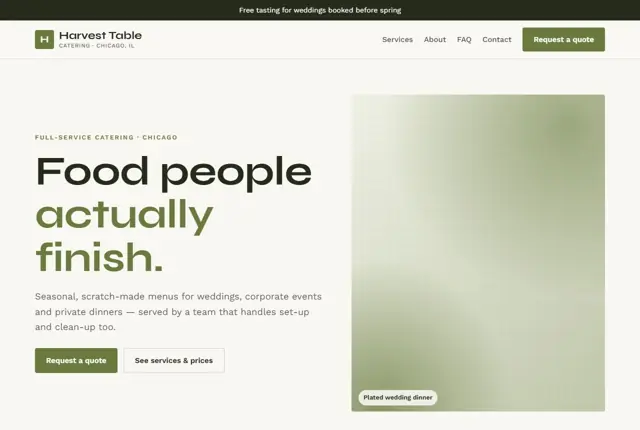
Choose your look
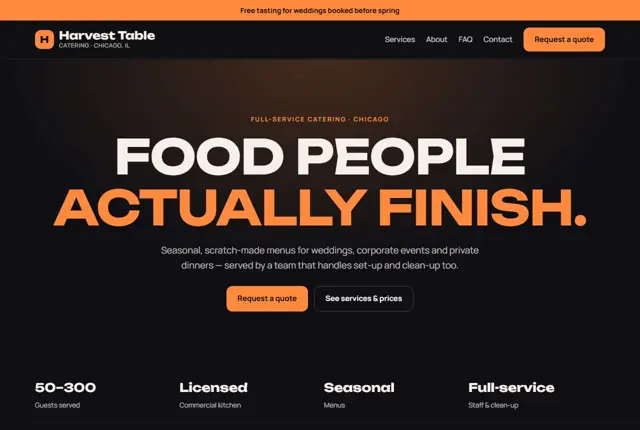
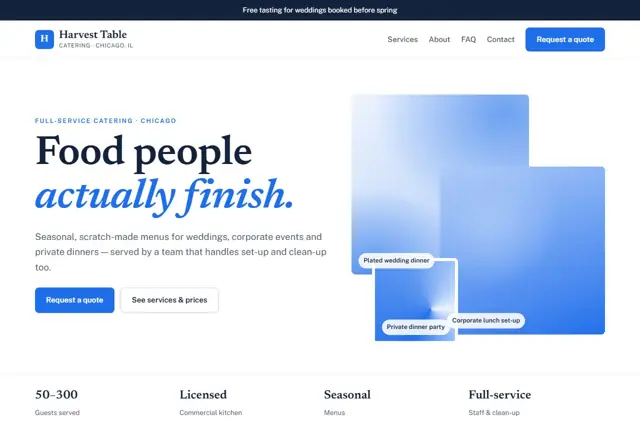
3 designs for your catering company
Same pages and words, three different styles. Pick one — or mix parts of them — and we match it to your colours and logo.
What your customers look for
Answer these before they ask
- Seasonal menus with per-guest pricing
- What full-service catering actually includes
- Dietary and allergy handling
- Delivery area for drop-off catering
Pages we build for you
Your catering company website, page by page
- Home with a tasting offer
- Menus by event type
- Drop-off catering
- Dietary information
- Gallery
- Request a quote
FAQ, Contact and Privacy pages are free on every plan.
Free guide
How to plan a caterer website that turns tastings into bookings
Pages every catering site should carry
A hosting couple, an office manager and a family planning a christening all need the same thing from a caterer: a clear picture of the food, the price and the service. Make menus the heart of the site. Create one page per event type, such as weddings, corporate lunches, private dinners, funerals and festivals, since each has different dishes and budgets.
Give each menu a name, list the dishes in full, and show a per-guest price with the minimum number of guests. Add a Drop-off catering page for simple orders, a Full-service page that explains staff, equipment and clearing up, and a Dietary page. A Gallery shows real plates and real events. The Request a quote page asks for date, guest count, venue and event type.
- Menus by event type
- Drop-off catering
- Full-service catering
- Dietary information
- Gallery
- Request a quote
What clients check before they ask for a quote
Food safety comes first, even if nobody says it aloud. State that your kitchen is registered with the relevant authority. In the UK, food businesses register with their local council and may display a Food Hygiene Rating; in the USA, caterers typically need health department permits and licences that vary by state and county. Mention staff food-safety training if your team has it.
Next is allergens. The UK requires information on 14 named allergens for food sold or served, and many other countries have comparable rules. Say how you handle allergies and cross-contact, and who the client speaks to before the event.
Then comes what the price really covers. Spell out staffing, crockery, linen, delivery, set-up, waste removal and service charge. Clients hate finding out about extras after the tasting.
How people look for a caterer
Typical searches are “wedding caterer near me”, “halal buffet catering for 100”, “corporate lunch delivery in Manchester”, “vegan canapés for a party” and “BBQ catering Austin”. People also ask assistants for the best choice for a particular situation: “a caterer for a 60-person outdoor wedding with gluten-free guests”.
Write menu pages to answer those requests directly. Open with the event type, the cuisine and the number of guests you serve comfortably. Name dishes, the main ingredients, and where they come from when that is a real selling point.
Describe how a booking runs from enquiry to clearing up. A short timeline helps a first-time client relax, and it is the type of clear explanation that assistants like to quote.
Seasonal menus and tastings
Menus that change with the seasons make a site feel alive and give you reasons to update it. Label each menu with the months it runs, and retire it when the produce is gone. A short note on why a dish is only served in autumn is a small detail that sets a real kitchen apart.
Tastings are your best sales step, so make them easy to request. Explain how many people can attend, whether there is a fee, and whether it is credited to the booking. Use photos you took yourselves. A dish that arrives looking different from the picture costs trust faster than any missing page.
- Menu months
- Tasting fee and credit
- Guest limit at tastings
- Photos from your own kitchen
Getting found locally as a caterer
- Choose Caterer as your main Google Business Profile category, and add more only where they match your work.
- Set a service area that matches the delivery radius in your price list.
- Upload photos of plated dishes, buffet setups and your team at work, not stock images.
- Ask clients for a review a few days after the event, once the compliments have landed.
- Make a page for each major town or venue area you serve, and mention venues you have worked at when the owner is happy for you to do so.
- Register with wedding and event directories in your country, and keep each listing consistent.
- Ask venues, planners and photographers you work with to link to your menus page.
Mistakes to avoid
- Calling every menu “Option A”, “Option B”, with no dish names, so nobody can imagine the food.
- Leaving out minimum numbers, which makes the quote on a small party an unpleasant surprise.
- Using one allergen disclaimer in the footer instead of explaining how allergies are actually handled.
- Publishing photos of food from another kitchen. Clients notice when the tasting looks different.
- Asking for a full event brief on the first form, which makes people give up before sending it.
Built in for caterers
Features that matter in your industry
Menu pages written as real dishes, not generic buffet categories
A dietary and allergy section search engines can read
Quote form that asks event type and guest count first
Found by Google — and recommended by AI
Someone asking an assistant “wedding caterer with gluten-free options in Chicago” wants a menu page naming the dishes, the dietary handling and the city. Menu and dietary pages here are written to be quoted that way.
Every Adyft site also ships with fast loading, structured data for search engines and a clear page for each service.
Questions
About websites for caterers
Can we show menu prices per guest?
Yes, menus are laid out with clear per-guest pricing for each event type.
Can we explain dietary and allergy handling?
Yes, a dedicated section explains how you handle allergies and dietary requests.
Can customers request a quote online?
Yes, a short form collects event type, date and guest count and reaches you directly.
How many menus should I put on the website?
Start with the ones you sell most, usually three to five. Each can be changed later, and monthly edits are included so you can add a seasonal one.
Can customers order drop-off food directly on the site?
A quote or order request form is the usual start, and you confirm by phone or WhatsApp. Online ordering with payment is possible as an add-on for simple items.
Do I need professional food photography?
It helps, but clear daylight photos from a modern phone are far better than stock images. We can advise on simple styling and angles.
What legal information should a catering site show?
Usually your business name, contact details, and your food registration or hygiene rating where one applies. Rules differ by country, so check with your local food authority.
Can I show prices that change with guest numbers?
Yes. A price table can show a per-guest rate for bands such as 20 to 50 and 51 to 100 guests.
How do I handle a client who wants a custom menu?
Add a line on each menu page inviting them to request a bespoke menu, and ask for the budget and any dietary needs on the quote form.






Your catering company website, live this week.
Pick this design, answer a few questions on WhatsApp, and we build the rest.